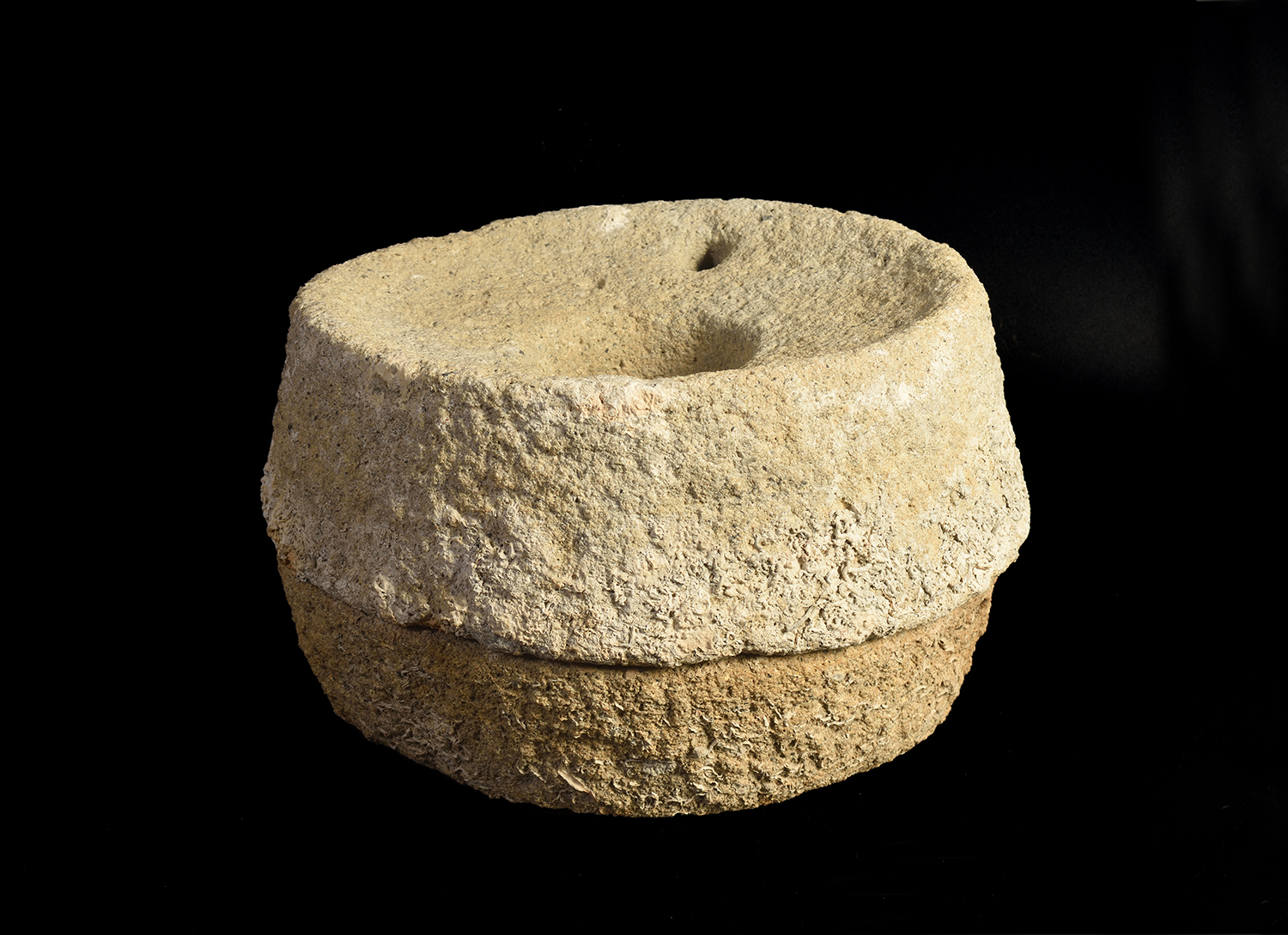
Sandstone
2nd c. BC
Illa Pedrosa (L'Estartit - Torroella de Montgrí - Baix Empordà)
Between 1959 and 1970, the sunken wreck of a small Roman cabotage vessel was excavated near Illa Pedrosa (Torroella de Montgrí, Baix Empordà). Undertaken by Federico Foerster Laures, a pioneer of underwater archaeology in Catalonia, under the direction of Miquel Oliva, this was the first methodical excavation off the Catalan coast. The archaeologists provided detailed documentation of the tasks, planimetry, studies by experts of the various finds and, finally, a preliminary publication in 1975.
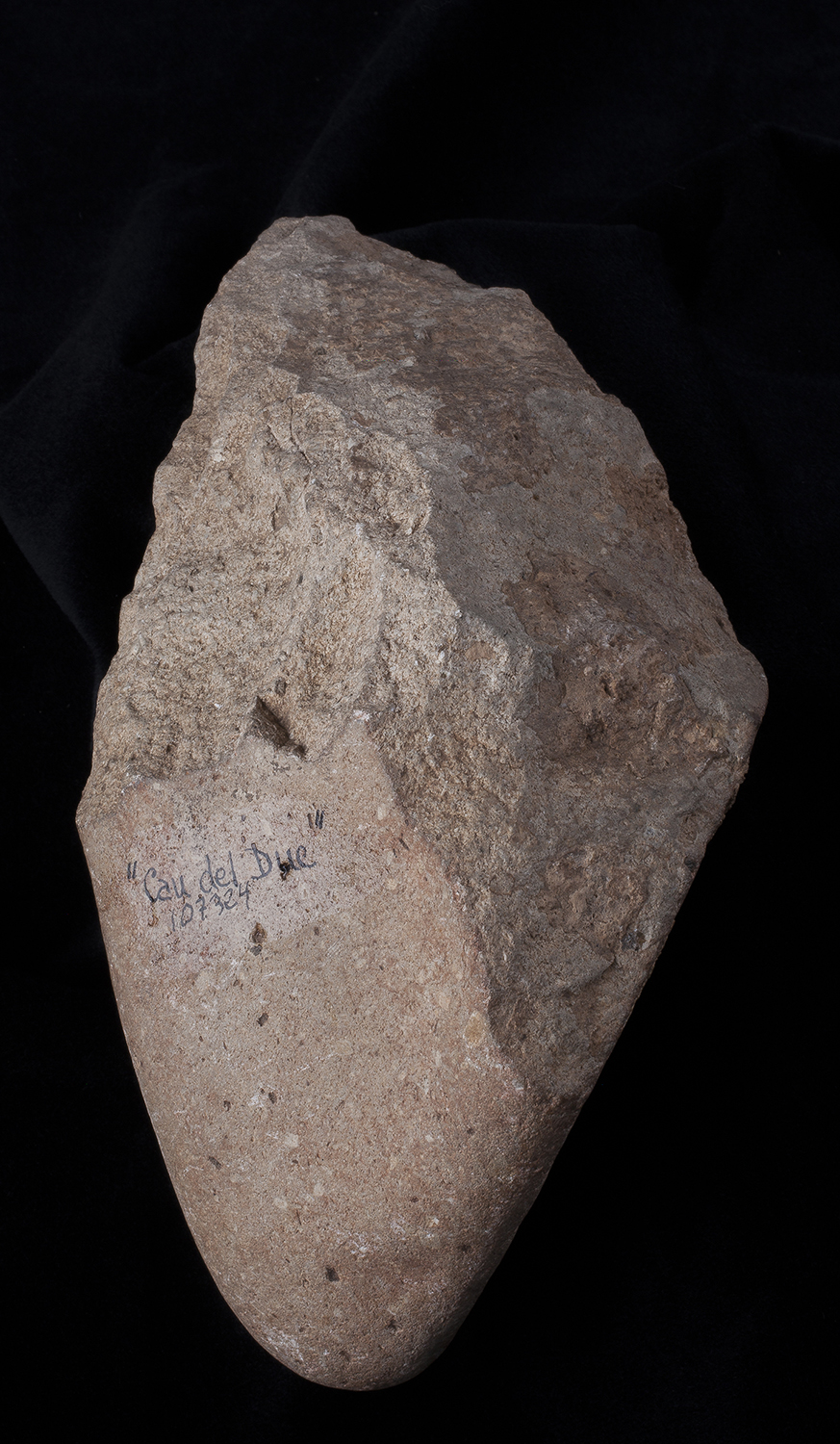
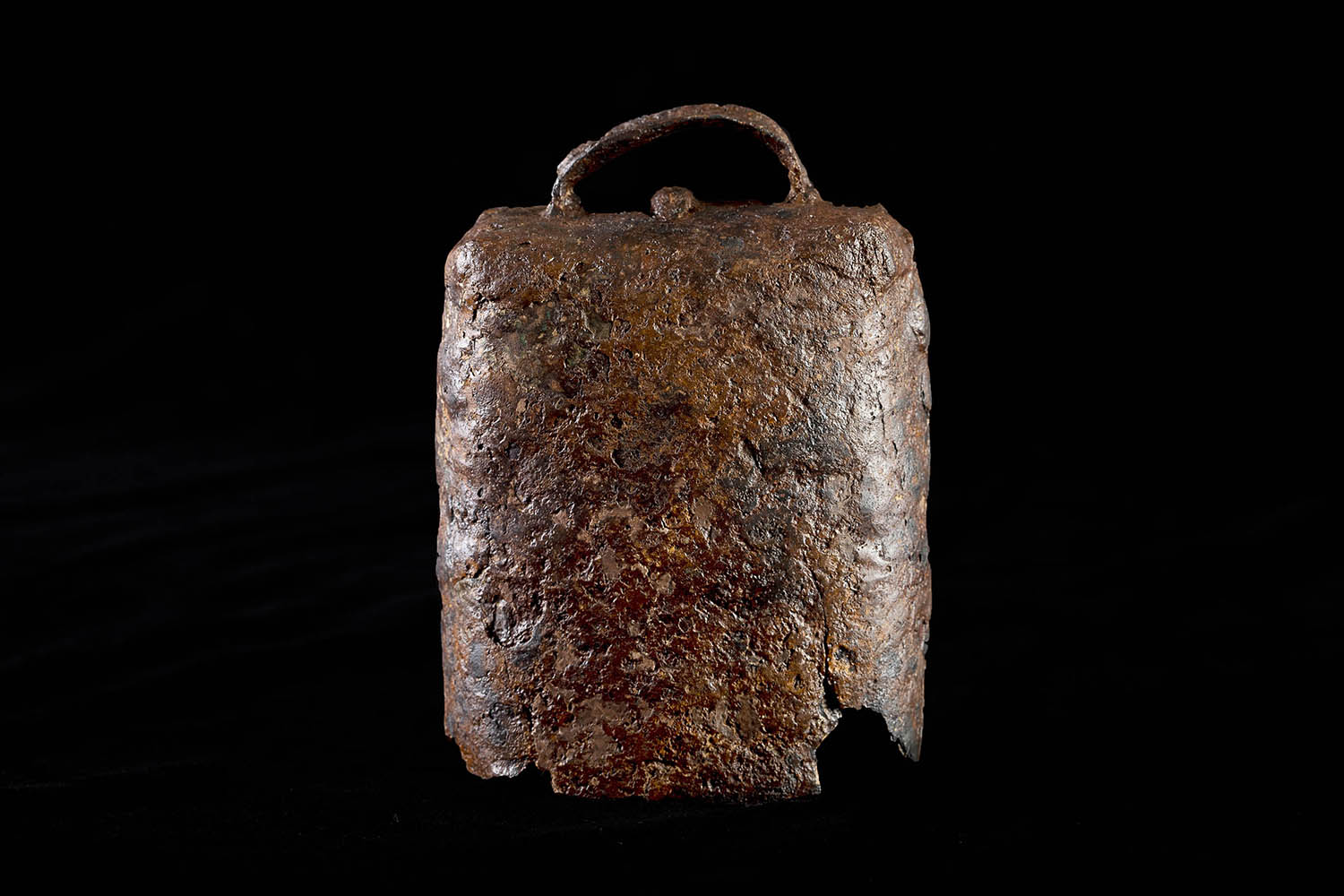
The ship’s cargo consisted of more than 300 black-glazed pottery vessels (Campanian A, except for two or three Campanian B pieces), several amphorae and, exceptionally, 130 millstones, which formed at least seventy complete manual rotary mills. To this we can add a few coins and other objects belonging to the crew. The finds have been dated quite accurately to between 140 and 130 BC.
The rotary hand mills consisted of two circular pieces with a frustoconical section, one convex and the other concave, which fitted together. The lower part, called the meta, was fixed, and the upper part, the catillus, was fitted to it with a wooden shaft and was turned to grind the grain. The catillus had a hole in the middle that served both to fit it with the meta and through which to pour the grain to be ground; the holes where the handle was fixed allowed it to be turned. The meta, on the other hand, only had the central hole for fitting the shaft. The Illa Pedrosa mills are between 32.5 and 37 cm in diameter and weigh between 20.5 and 22 kg.
Petrological analysis determined that the stone for the mills came from quarries near Ullastret, probably from those of Clots de Sant Julià in Peratallada. From there, once manufactured, they would have been transported to Empúries, where they were loaded onto the vessel, which set sail from the port of Empúries heading south, towards a destination it never reached.