Bronze
3rd c. AD
Pla de l'Horta Roman Villa (Sarrià de Ter - Gironès)
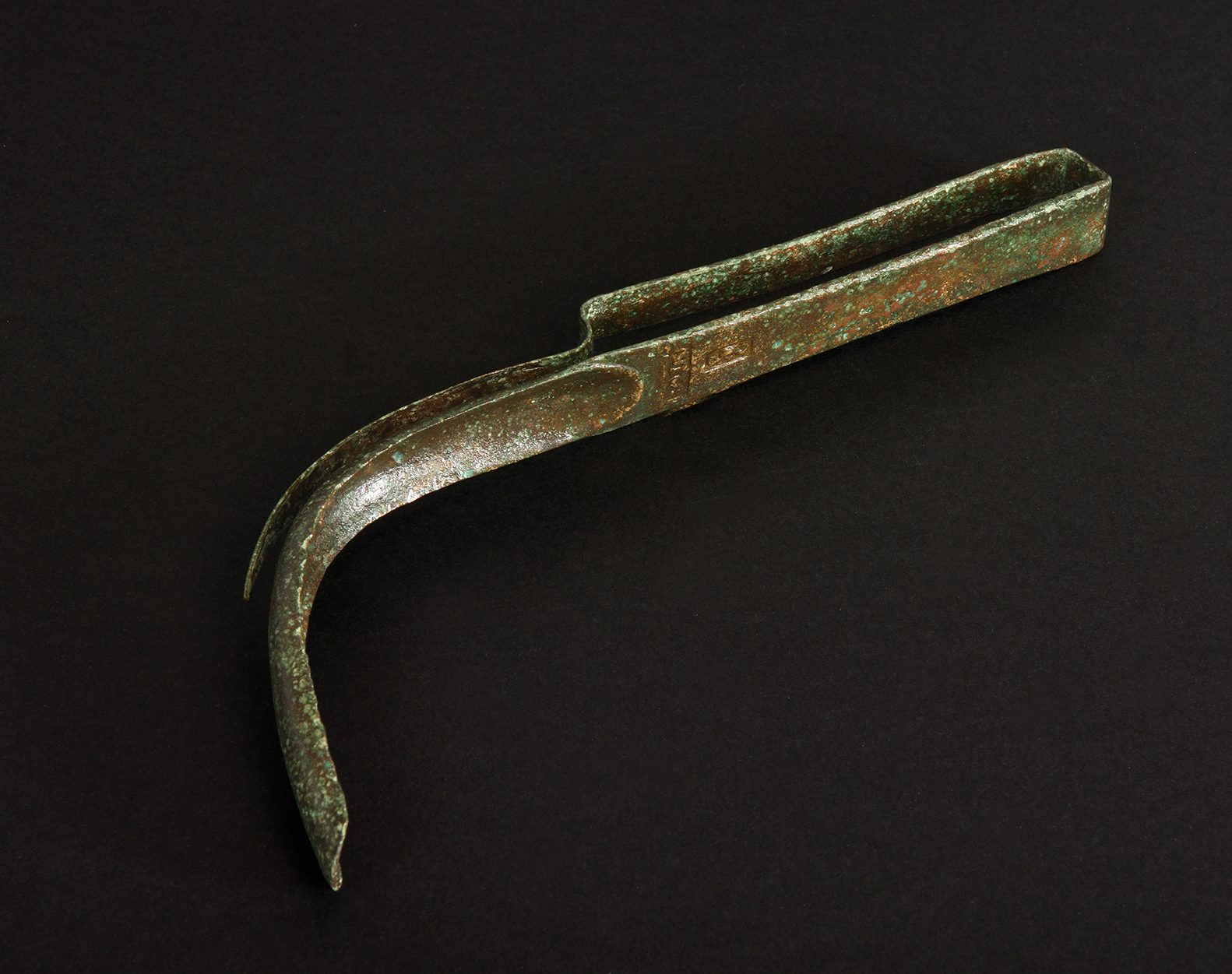
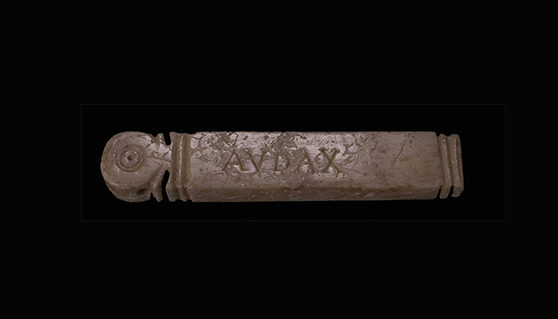
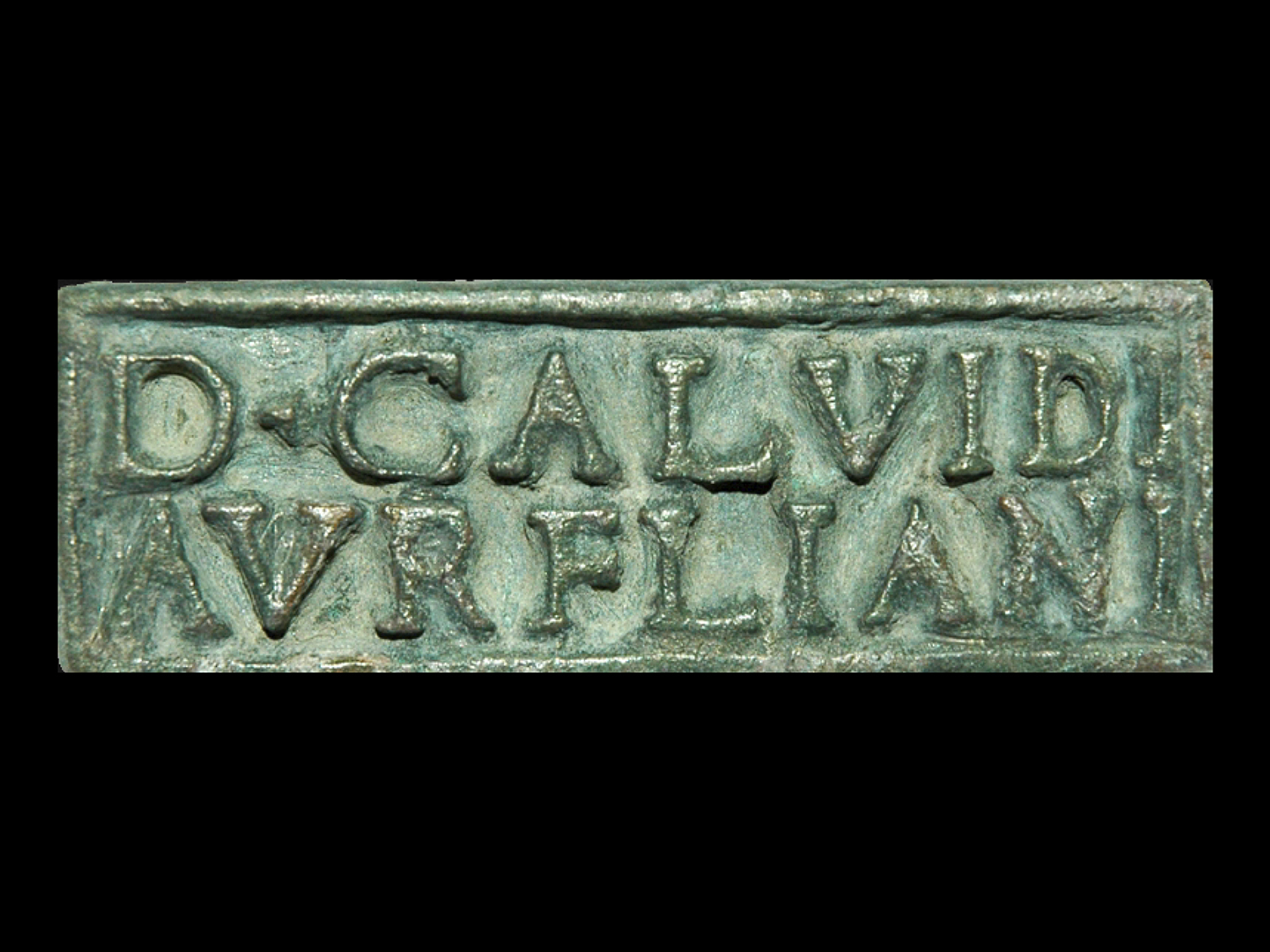
A signaculum is a bronze seal bearing a personal name that was used by the Romans to mark things. We will see that there are many hypotheses as to what was marked with this type of seal. But let’s take it step by step.
Our signaculum is made of bronze; it is rectangular (7 x 2.5 cm) and has a ring to hold it and carry it hanging. It bears the name D · CALVIDI · AVRFLIANI in a rectangular frame, inverted so that when stamped it can be read correctly, like our present-day rubber stamps. It comes from the Roman villa of Pla de l’Horta (Sarrià de Ter, Gironès) and dates to the 3rd century AD.
As is common in this type of seal, we find the three elements that made up a Roman name: the praenomen or personal name, abbreviated to D (for DECIMUS); the nomen or family name (our surname), CALVIDUS, and the cognomen or nickname AURFLIANUS. The name is written in the genitive to indicate the ownership of what was being marked: De Decimus Calvidus Aurflianus.
A study of 42 signacula found in Gallia Narbonensis (France) offers several hypotheses regarding what was marked with these seals. For example, roof tiles or amphorae, although the marks on this type of ceramic only very rarely appear to have been made with a seal of this type. They have also been identified as marking lead blocks. However, it seems most likely that they were used to mark agricultural or artisanal products that were to be sold. For example, a loaf of charred bread preserved in Pompeii bears a mark made with a signaculum. It has even been suggested that they could have been used to sign documents.
And finally, an anecdote. The museum has a signaculum from Empúries bearing the name L · SEXTILI · CALLISTI (Lucius Sextilius Callistus). It was originally interpreted as the seal of a Roman chiropodist (callista in Catalan). That’s Latin for you!