Glass
1st-2nd c. AD
Empúries (L’Escala – Alt Empordà)
In the cemeteries where deceased Emporitans were buried in the early years of the Roman Empire, the 1stand 2nd centuries AD, cremation was much more common than burial.
The body of the deceased was washed and anointed with perfumed oils or balms. Once cremated, the ashes were collected and placed in pottery, glass or lead containers. The urn was placed in a small pit, where it was accompanied by the ointment or balsam jars that had contained the oils or balms with which the body had been anointed. Personal objects could also be placed there. The whole was covered with earth and marked by a stone or pile of stones.
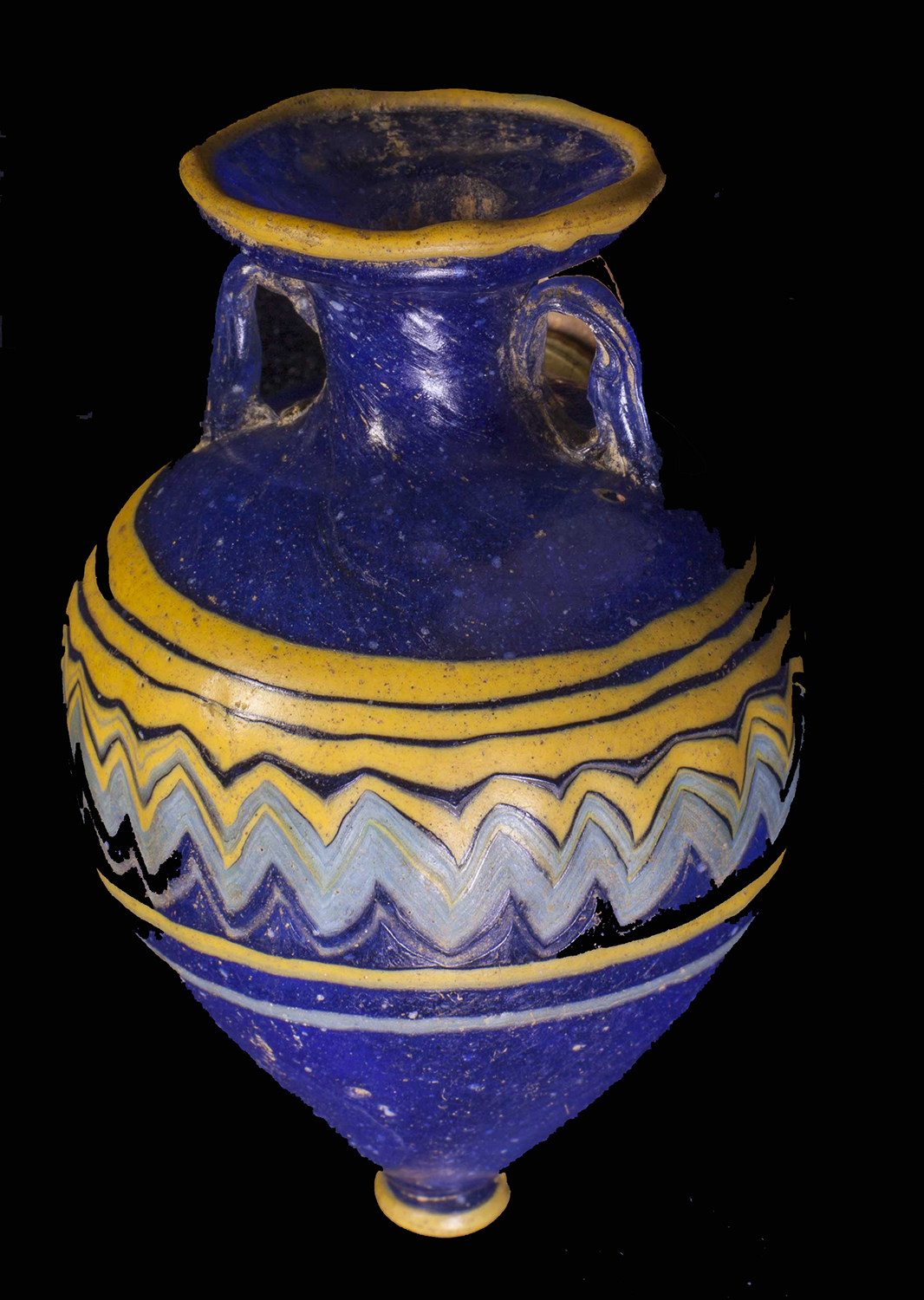
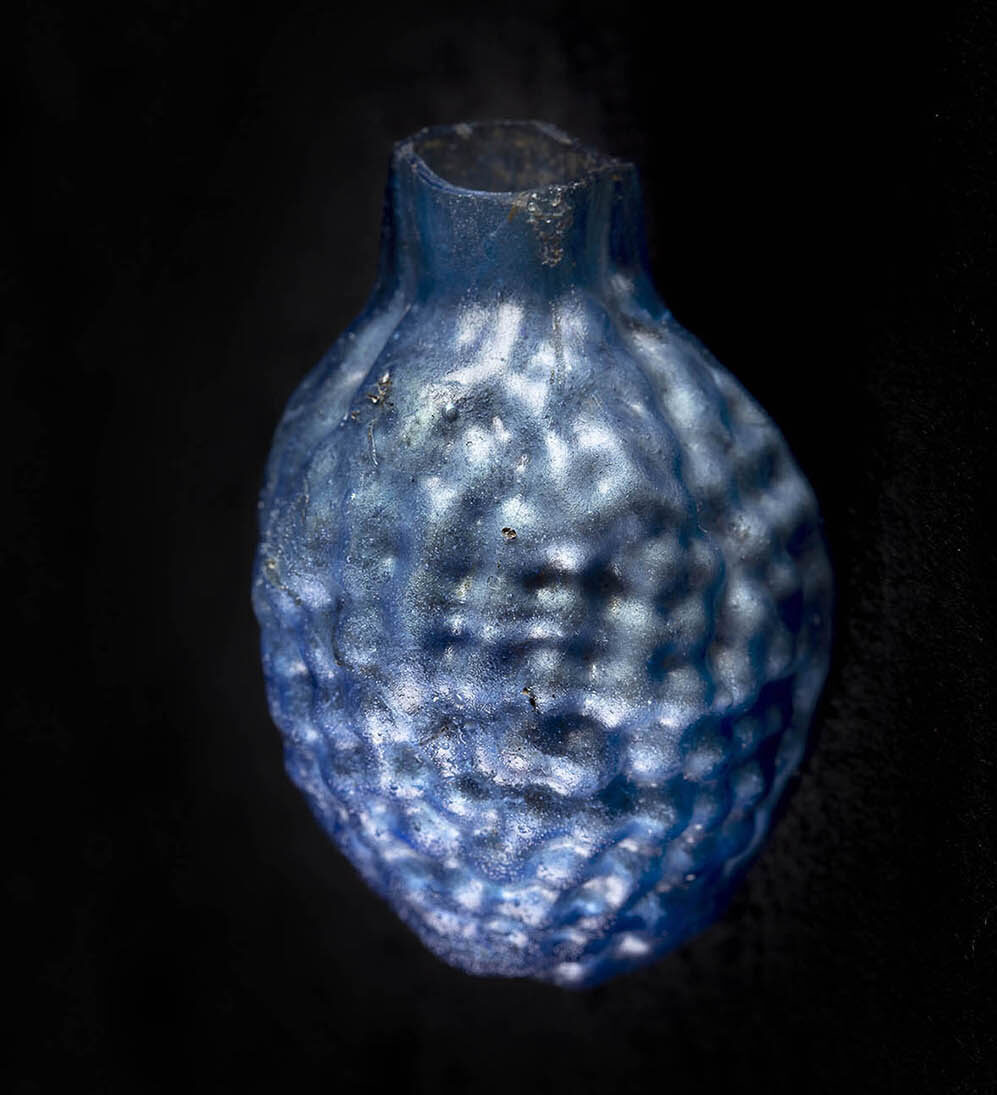
The balsam jar that we present here comes from one of these Emporitan cremation tombs from the 1st-2nd centuries AD. It is some 5 cm high and has a diameter of about 3.5 cm. It is made of blue glass blown with a double mould in the shape of a pineapple and is deformed by the fire. It is missing part of the neck and lip.
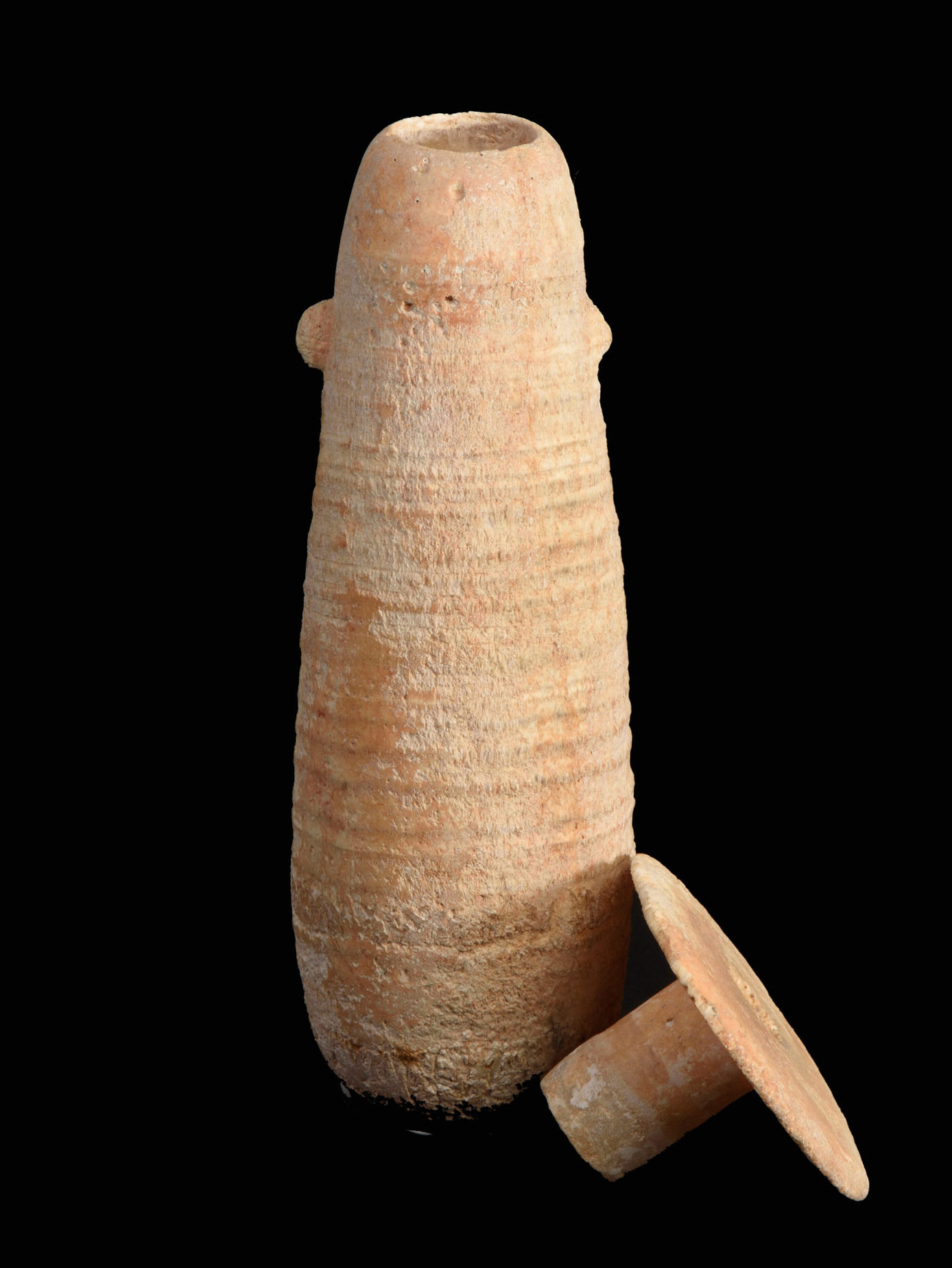
Glass or pottery balsam and ointment jars were usually elongated receptacles with a long neck and a slight bulge. Balsam jars like this one came in pineapple, grape, date, human face or fish shapes, among others. Initially they came from workshops in the Near East (Syria, Palestine and Egypt). But by the 1st century AD, oriental workshops had been established in the western part of the Empire: on the Italian Peninsula, in Gaul, in Hispania, etc. Our balsam jar came from one of these western workshops.
Citizens of the western provinces could have the elegant Egyptian and Syrian-Palestinian designs, but manufactured locally, making them much more affordable. However, a balsam flask like this stood out from the more common ones. Hence the point of sophistication we would suggest.