Pottery
3rd c. BC
Empúries (L’Escala – Alt Empordà)
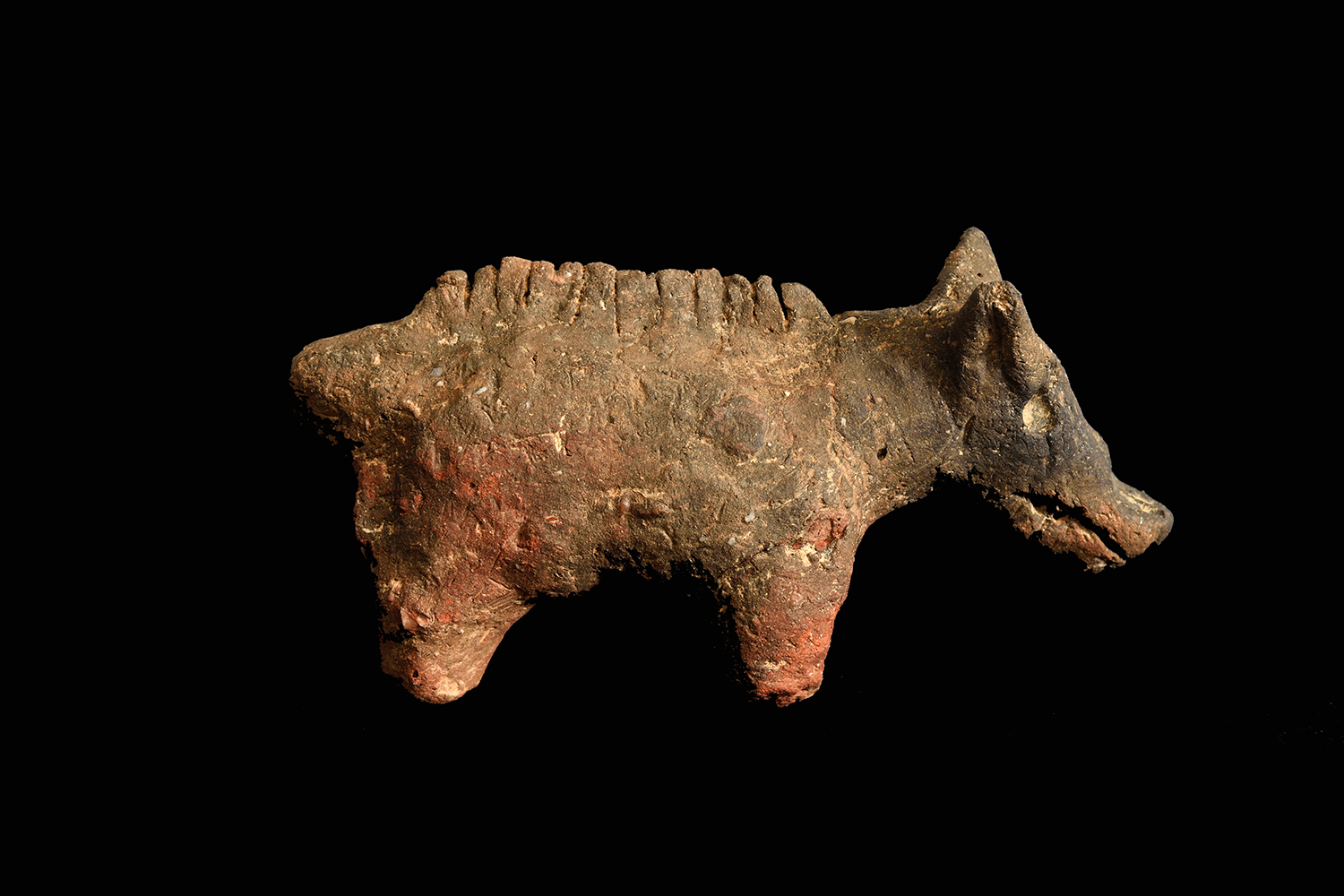
In the 6th– and 5th-century BC Greek necropolises located between Rhodes and Sicily, it is not uncommon to find tombs containing, among other offerings, terracotta figurines representing animals. The most frequent are birds, followed by piglets, goats and turtles. However, the representation of these animals varies according to the region, as does their presence, in equal measure, in the tombs of adults, youths or children, when age and sex have been determined, and the quantity in which they are present. They have often been interpreted simply as toys, but it is more complex than that. Although animal figurines are more abundant in children’s tombs, only a third of those documented contain them. They are found in this order: birds, turtles, piglets, goats, chickens, lions, dogs and horses. Chickens, birds and lions predominate in the tombs of young people, while in those of adults they are piglets, birds and donkeys.
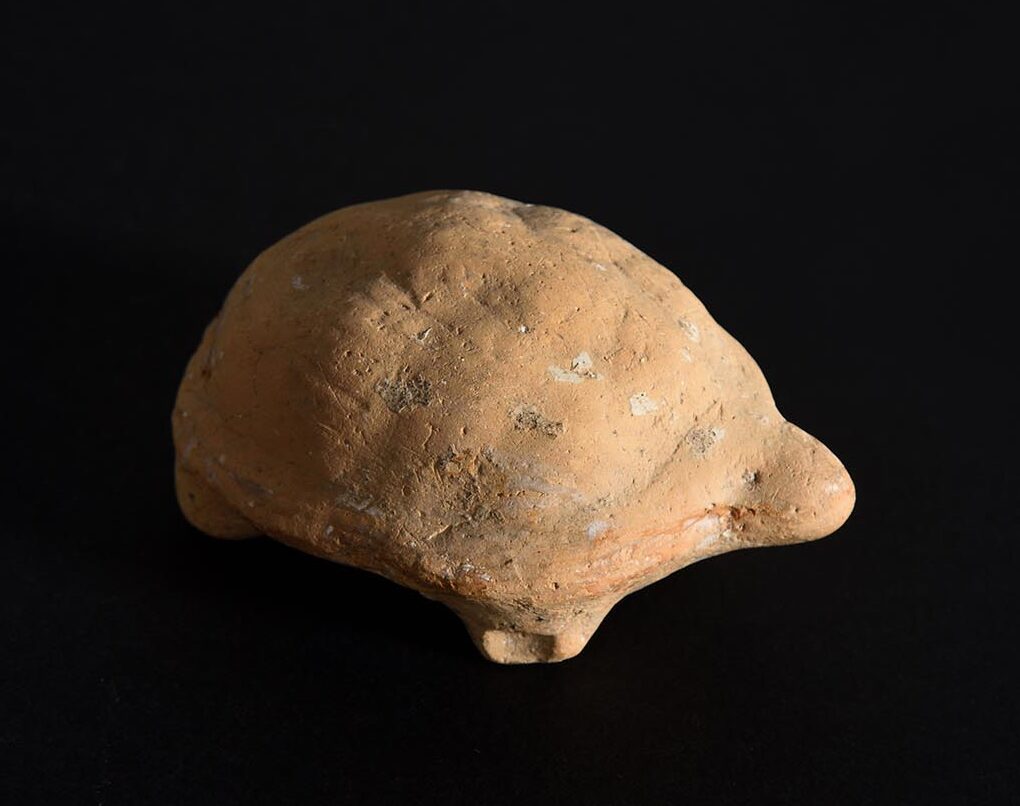
Our turtle came to the museum in 1895 or 1896, having been looted from one of the Emporitan necropolises. Made in a mould, it dates to between the 6th and 5th centuries BC. Let’s review the animal terracotta pieces from the Emporitan Greek necropolises of this period. The so-called “Tomba Cazurro” contained a bird, a turtle and a rooster; the Martí 77 burial contained a piglet or wild boar; the Bonjoan 43 burial contained two turtles and a piglet or wild boar; the Bonjoan 69 burial contained a bird. Out of context, in our museum, in addition to the turtle we present here, we have two more, plus two birds and a goat.
With this variability, what meaning did these offerings have? It appears that the animal figurines may have evoked the life cycle that children and young people especially would not have been able to complete. Thus, the birds could represent youth, while goats and turtles would be associated with the idea of fertility. However, we still lack much information and analysis to be able, from the mentality of the ancient Greeks, to enter into the mystery of death and the rituals that accompanied it.