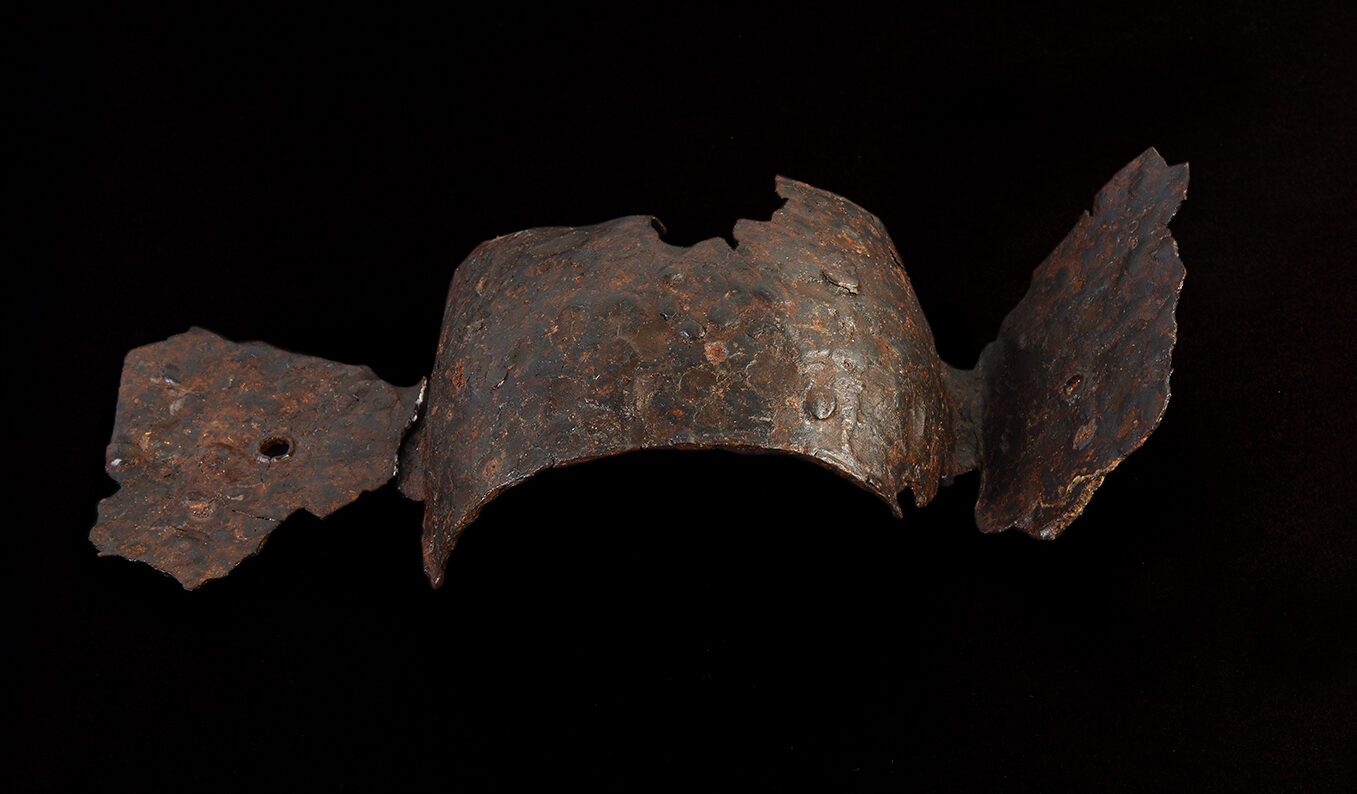
Iron
3rd-2nd c. BC
Mas Castellar (Pontós - Alt Empordà)
The panoply of Iberian warriors is well attested, both offensive (various types of swords and spears, daggers, etc.) and defensive (helmets, cuirass, etc.) weapons, as they were made of iron or bronze and have been preserved. However, there is one defensive weapon, the shield, of which we only preserve one of its elements: the umbo, which was metal. The body of the shield was made of wood and usually covered with leather and fabric, materials that are only preserved under very specific conditions.
The descriptions of the classical authors and depictions in sculpture (such as those of the warriors of Osuna) or on the decoration of pottery vessels give us fairly precise information about these shields and their umbos.
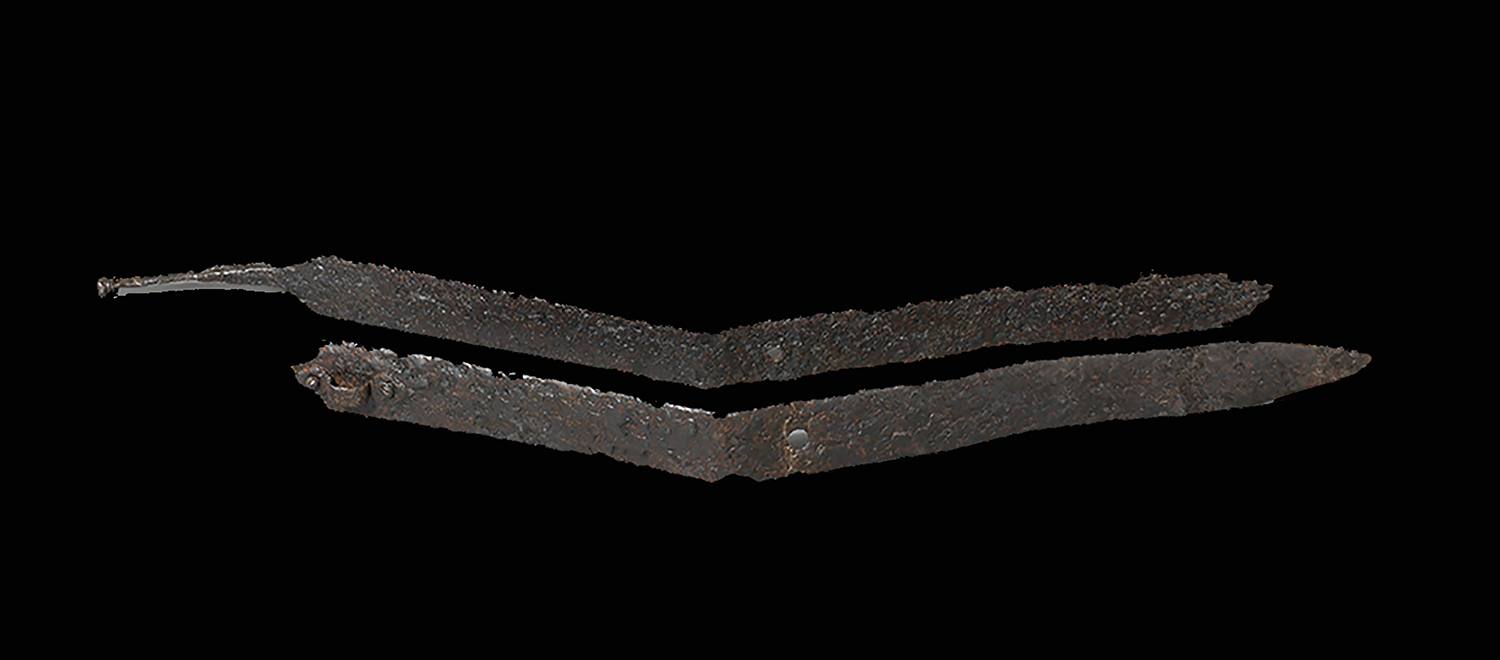
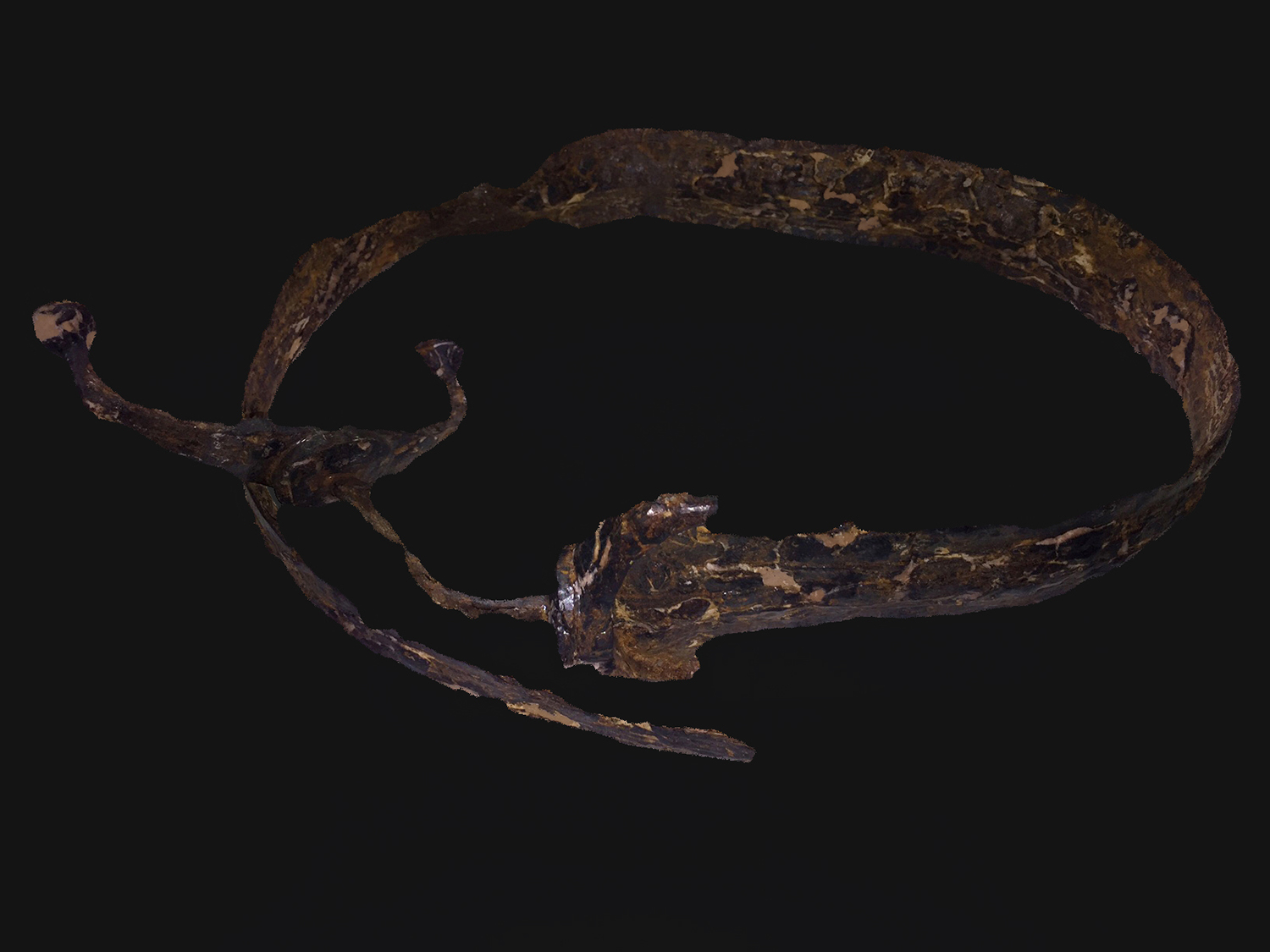
These oval-shaped Celtic-type shields were made of wood. They were held and deployed with a handle (made of wood or metal) set horizontally in the centre of the inner part. A hole at this point facilitated the handling of the shield, but it had to be protected. For this purpose, a piece of wood, the spina, was placed along the entire length of the outer part of the shield, with the central part hollowed out in a concave shape to fit and protect the hand. Above, surrounding and reinforcing it, was the umbo, which in this case is one of the so-called winged type. It was fastened to the body of the shield with rivets that pierced the wings. The spina and the umbo, in addition to protecting the warrior’s hand, made the shield more resistant to blows from enemy weapons.
The umbo we present here comes from Mas Castellar (Pontós, Alt Empordà). It is made of bronze and dates from the 3rd-2nd centuries BC.