Iron
3rd-2nd c. BC
Mas Castellar (Pontós - Alt Empordà)
If we were farmers or foresters and had at hand the iron agricultural tools that have been preserved from the Iberian or Roman eras, we would surely be able to name and use almost all them without problems, because most of them have reached the present day without significant structural changes.
When over time a tool has reached the form and characteristics that allow it to carry out the activity for which it was designed, it will only vary in matters of detail or in minor improvements to make it even more efficient. The basic structure, however, tends to remain the same.
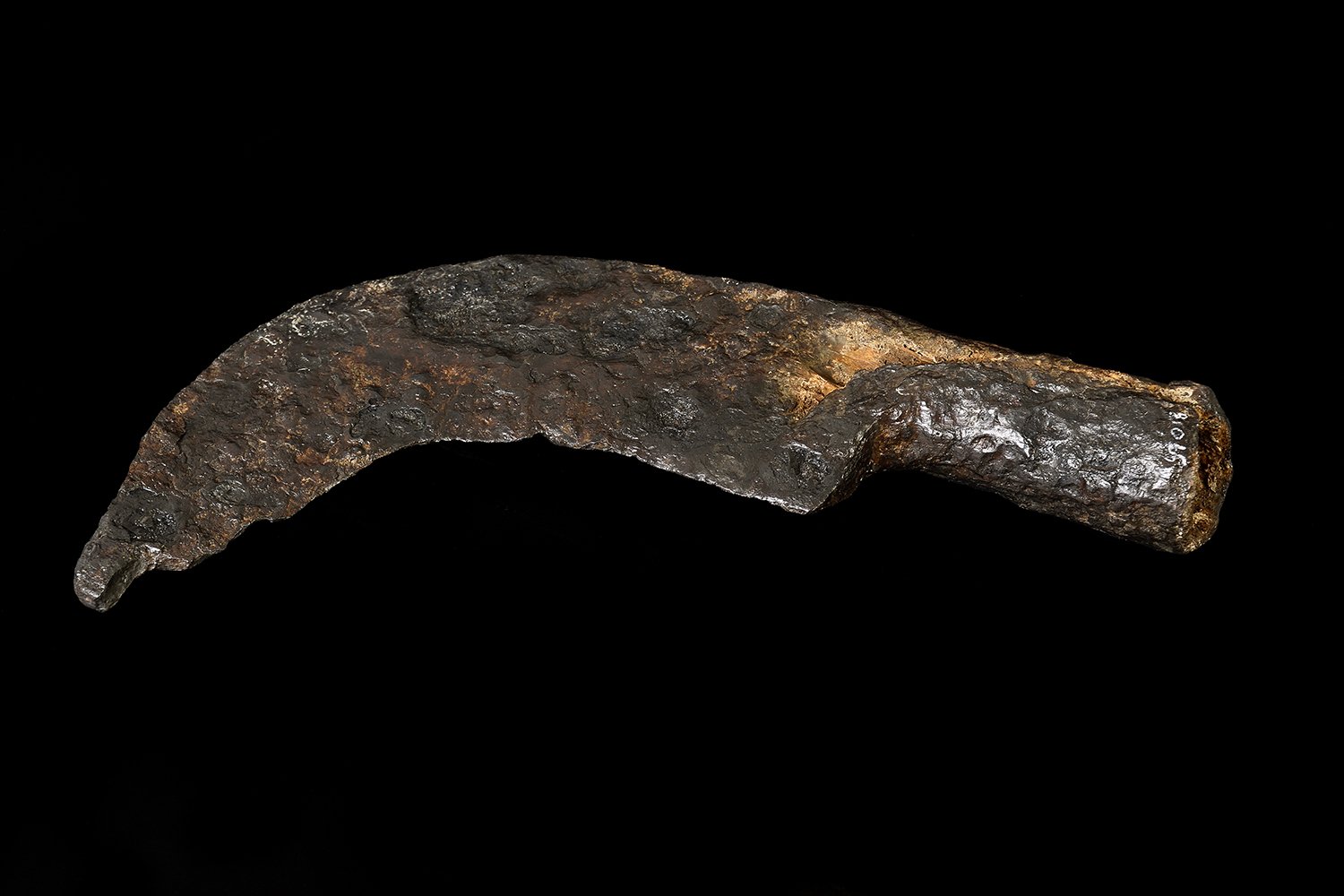
For example, let’s look at this scythe. It was found with other tools in a silo at Mas Castellar in Pontós (Alt Empordà) and dated to between the 3rd and 2nd centuries BC. It is about 25 cm long and has a tubular fitting for the handle. The length of the handle, made of wood, would have depended on what the tool was to be used for. It was inserted through the bent spike that formed a tube and was fixed by means of a crossbar, which has been preserved. The tip ends in the shape of a small cube, a striking element. Except for the detail of the tip, which is not found in all ancient scythes, it is no different to those that we can find today in DIY shops (with a tubular handle like this or with a spike handle that is inserted into the wooden handle).
The generic Latin term falx (pl. falces) designates this type of curved cutting tool for work in the fields or the forest. They range from reapers’ sickles to scythes like this one and the billhooks of grape harvesters.
The treatise De agri cultura by Marcus Porcius Cato, a contemporary of our scythe, speaks of falces faenarias, stramentarias, arborarias, uinaticas, etc. And the repertoire was even wider, indicating the variety of such instruments available to Roman farmers and foresters.