Iron
3rd-2nd c. BC
Puig Rodon (Corçà - Baix Empordà)
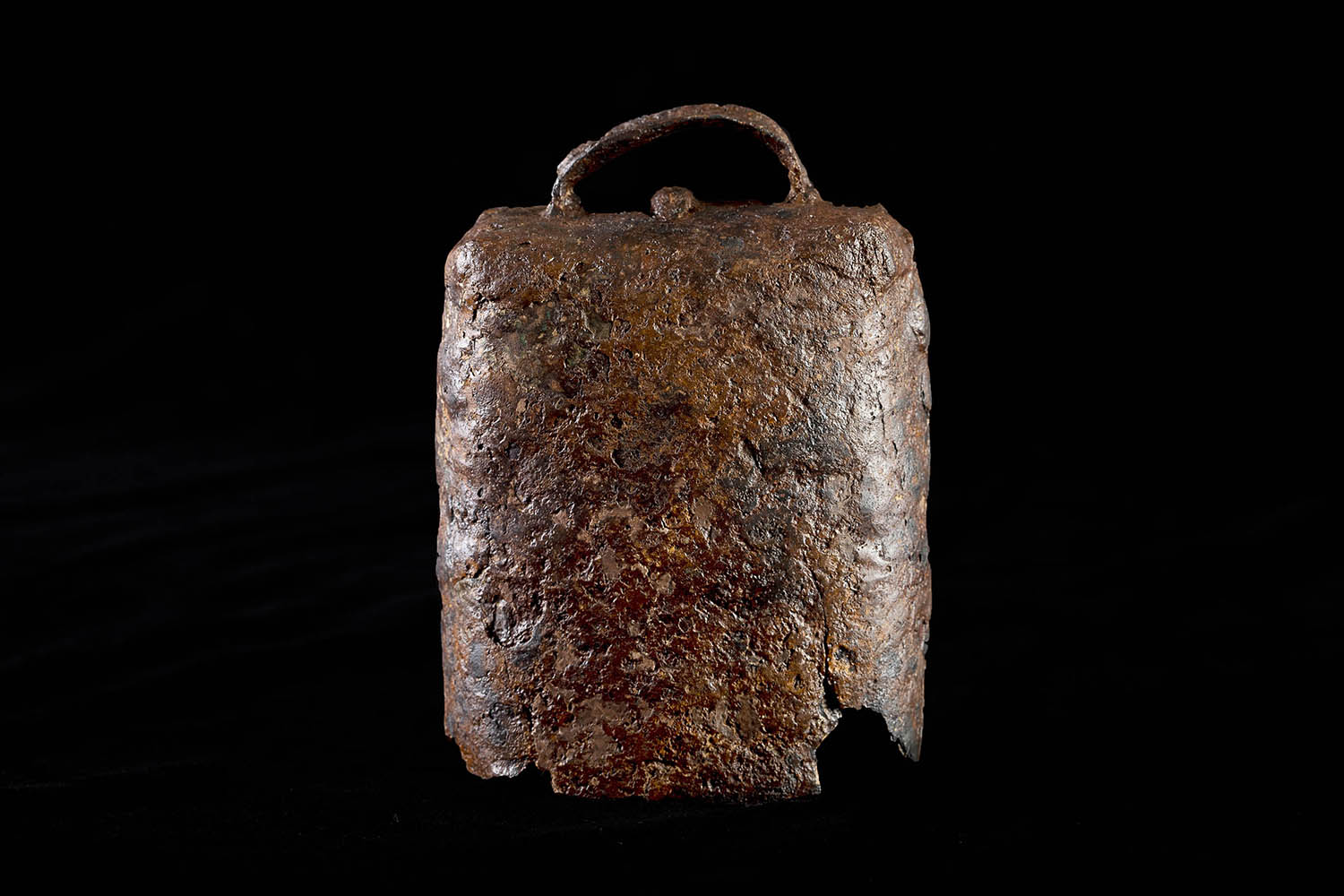
Today we delve into the world of livestock and shepherds using a bell as a way in. This is a bell from Roman times, although it is identical to those used today. It comes from the villa of Puig Rodon in Corçà, Baix Empordà, and dates from the 2nd or 3rd century AD. The villa has been known since the mid-19th century and Josep Pella i Forgas reported its discovery in 1854. Mosaics were found there and some fragments were brought to the museum in 1873. However, it was not until the excavation campaigns of the 1980s that detailed knowledge was obtained.
The iron bell is about 13 cm high, including the suspension ring, although it has lost its clapper. Given its size, it was probably used for sheep. In fact, footprints of sheep or lambs, piglets and poultry have been found imprinted on tiles manufactured in the same villa, stepped on while they were drying, before firing.
Bells of this size or smaller, and larger ones used for oxen or cows (such as the 21-cm example from the villa of Pla de l’Horta in Sarrià de Ter) are well known in the Roman world. Livestock played an important role in the economy –for food, making bone and horn instruments and objects, hides, leather, etc.– and was an important element in the pars rustica of villas.
Two of the twelve books of the treatise De re rustica by Columella (1st century AD) are devoted to livestock. Latin non-agronomic literature also echoes this world. A world of shepherds, idyllic and idealised in the extreme, is present in one of the works of the classical poet par excellence, Virgil, in his Bucolics.