Pottery
1st c. AD
Empúries (L’Escala – Alt Empordà)
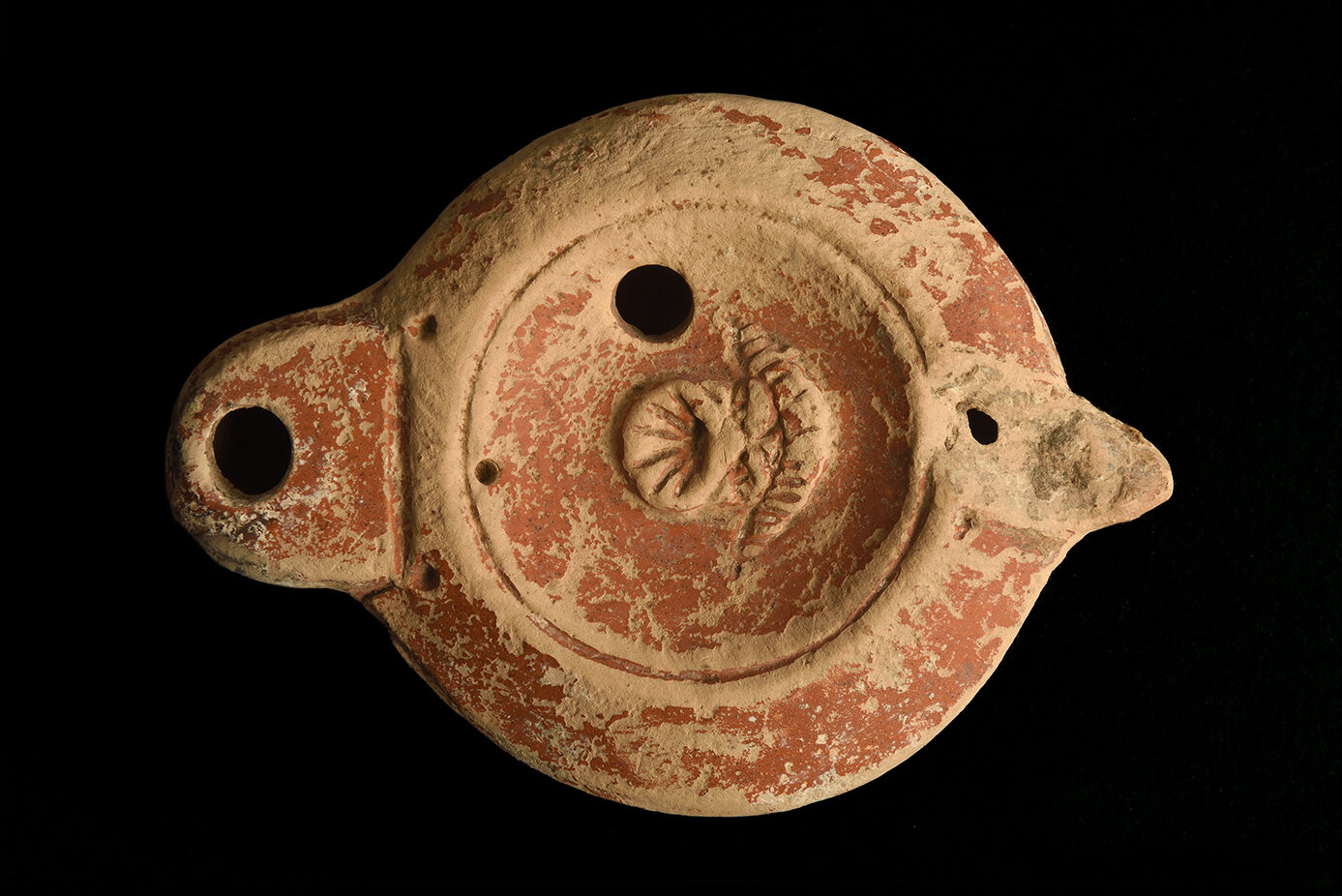
Clay lamps were one of the main lighting systems in Roman homes. Manufactured in moulds, they present a very wide graphic repertoire from the Roman world. Depictions include scenes from everyday life, gods, goddesses, mythological characters, objects, animals, erotic scenes, vehicles and, of course, representations of the games and performances of the time, such as gladiators, wrestlers, chariot races, actors and theatrical masks.
Municipium Emporiae —Roman Empúries— had an amphitheatre and a palaestra, but not the characteristic semicircular theatre. However, Emporitans who had never been able to attend a theatrical performance would have had an idea of one through the lamps with depictions of masks, like the one we present here today. On the base it bears the manufacturer’s mark: C.OPPI.RES (Caius Oppius Restitutus); this was an important Italic workshop, the most represented in Empúries, active between 80 and 160 AD.
In classical Roman plays, the actors or histriones were always men. In both tragedies and comedies, the types of dress and their colours, and especially the wide range of masks (personae), indicated in each case which character, male or female, was involved. In fact, rather than individual characters, they were character-types, which were thus easy to identify at a glance.
It seems that female actors emerged, at least sporadically, around the 4th century AD. However, there was one genre in which both men and women had always performed: mime (mimus). Roman grammarians defined it as the representation of vulgar actions and rude characters. They were short works of a realistic and satirical nature, which always enjoyed great popularity. In this case, and unlike tragedy and comedy, the actors and actresses performed without masks.